0.2–60 mm
TECHNICAL BUYER GUIDE
How to specify carbon fiber plate thickness for quotation.
Thickness should be selected together with part size, load path, support span, hole pattern and machining depth. A millimetre value alone is rarely enough to define the right plate.
Discuss your requirement →
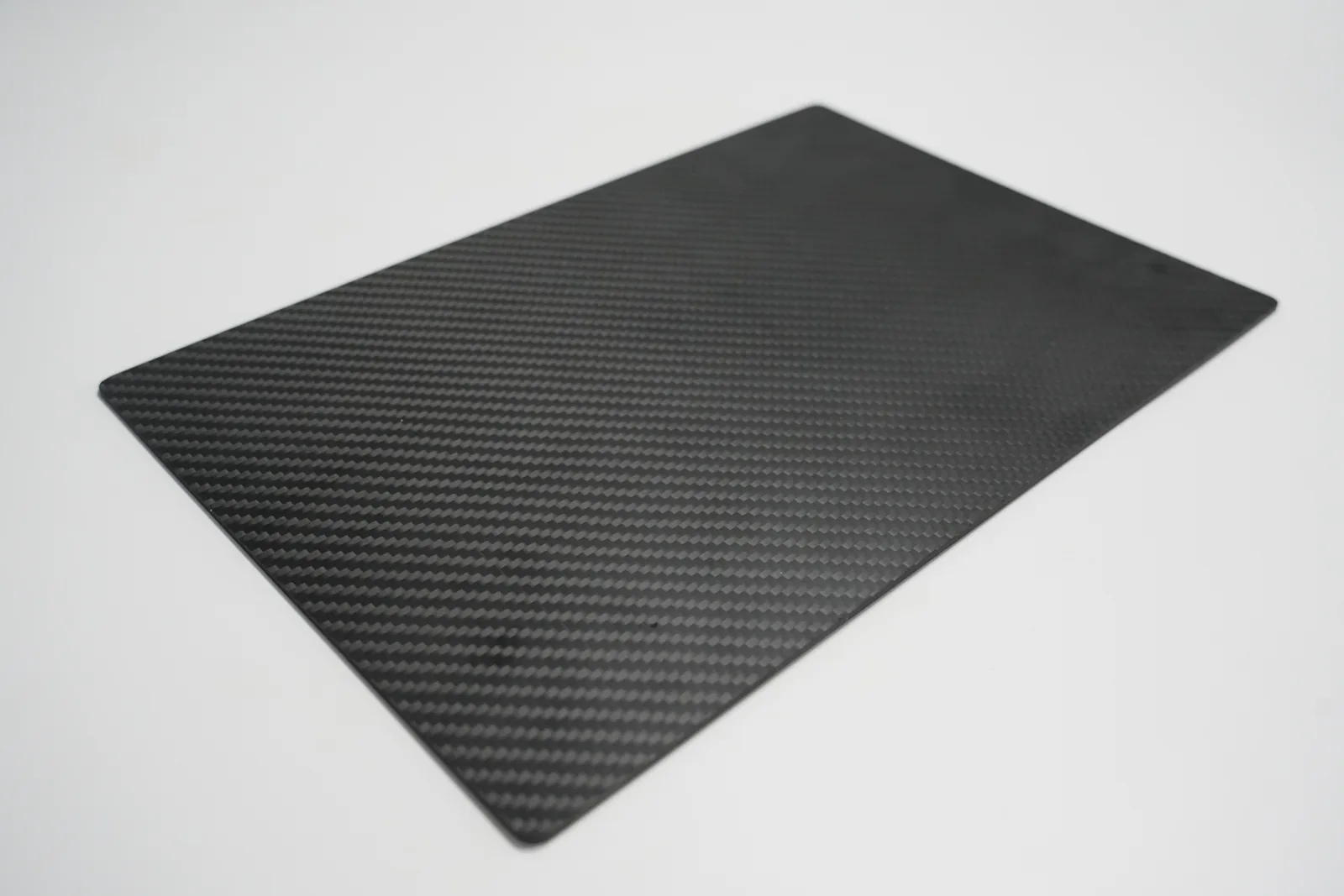
400 × 500 / 500 × 600 / 1000 × 1200 mm
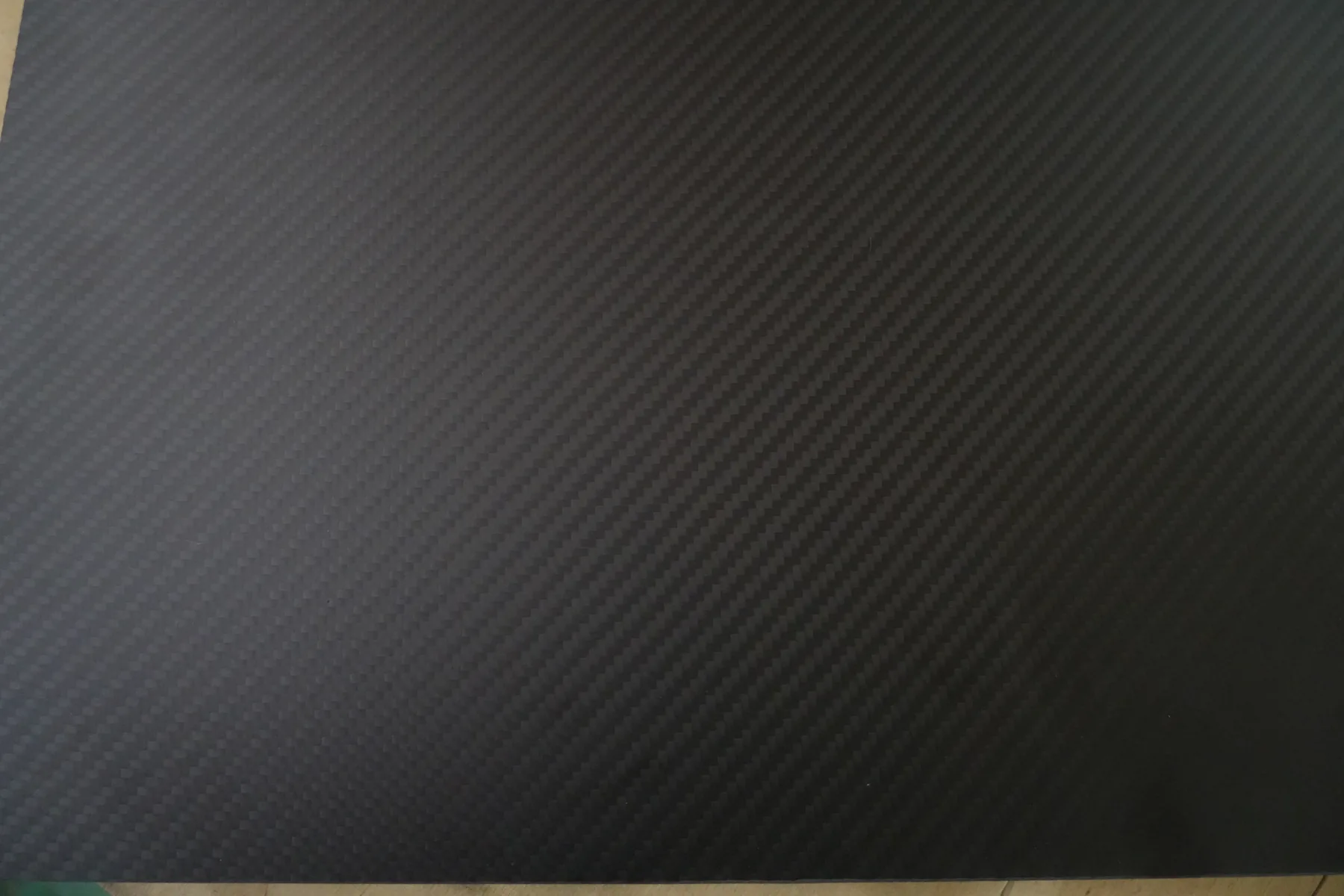
Matte or glossy
Twill or plain
THICKNESS SELECTION INPUTS
Six questions to answer before choosing millimetres.
This guide is a specification checklist, not a substitute for application engineering. State the functional requirement so the plate can be reviewed in context.
What load will the plate carry?
Describe whether the plate is a cover, mount, frame, support or structural element. Include the direction and type of loading where known.
What is the unsupported span?
Two parts with the same outside size may need different stiffness depending on mounting points, span and the location of applied forces.
Where are holes and slots located?
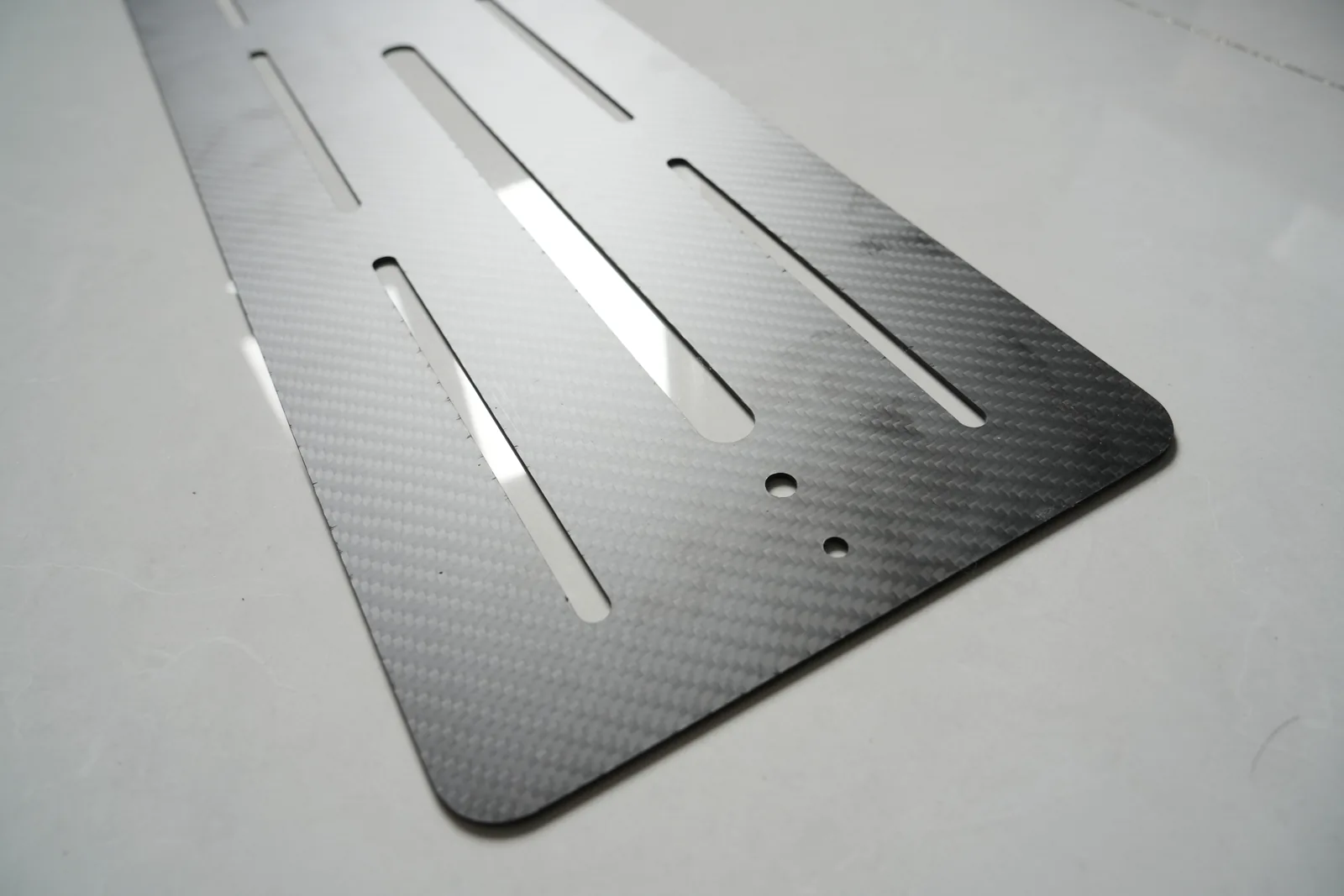
Hole diameter, slot width, edge distance and fastener layout affect the finished geometry and should be shown in the drawing.
Is the order plate or finished part?
For plain plate supply, specify length, width and thickness. For machined parts, attach STEP geometry and identify critical features.
Which surface is required?
Choose matte or glossy and twill or plain weave. If appearance is important, state which face remains visible in the assembly.
Is this a prototype or batch order?
Quantity and timing influence the supply route. State whether you need a sample first and the target delivery window.
TECHNICAL RFQTurn the inputs
Turn the inputs
into an RFQ.
Share the plate size, proposed thickness, application, mounting geometry and quantity for review.
Useful inputsDimensions and thicknessQuantity and applicationSTEP file for machined parts